
Bradford Factor Score Calculator

Calculate your Bradford Factor score instantly with our free online calculator!

Enter the two figures below to get your score, what it means and what to consider next. Use a rolling 52-week period for the most useful result.

One spell = one absence, however long
All unplanned days in the same period

What is the Bradford Factor?

The Bradford Factor is a popular absence management metric designed to highlight patterns of frequent, short-term absences that can have a significant impact on productivity. It calculates a score based on two key factors: the number of separate absence instances and the total number of days absent. This score helps employers identify trends and manage attendance more effectively.
What does your Bradford Factor score mean?

There’s no universal standard, so treat these bands as a rough guide and let your own absence policy set the thresholds.

Low Score: 0 to 50

This is generally considered acceptable, and no action is usually needed. Keep an eye on it over time, as a few short absences can push a score up quickly.

Moderate Score: 51 to 200

Many employers use this range as a prompt for an informal check-in. A supportive conversation about wellbeing is usually more useful than a formal process at this stage.

High Score: 201 to 500

This level often triggers a formal review under an absence policy. Check the reasons for the absences first, and consider whether any should be excluded or handled differently.

Very High Score: Over 500

Scores this high usually need a documented review. Take care to follow your own policy and consider any health or disability-related factors before acting.

See how Shiftie tracks absences

Absence tracking that does the maths for you

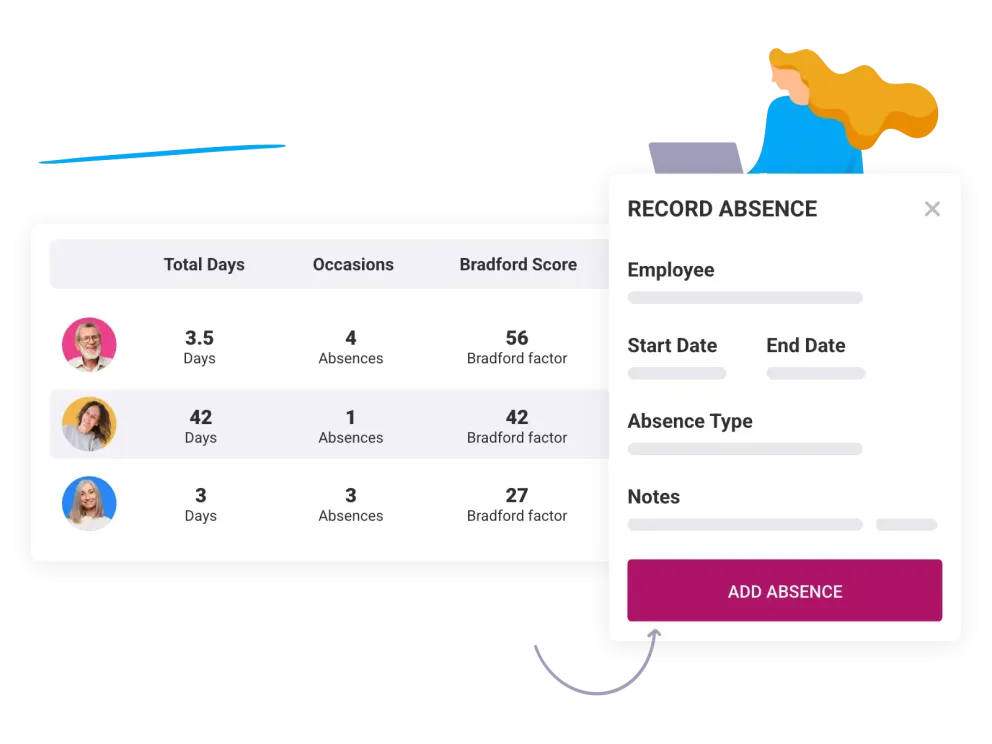
Stop recalculating the Bradford Factor in spreadsheets. A one-off calculator is handy, but real absence management means tracking every employee, every week, and spotting patterns before they become problems. With Shiftie’s absence management, you can:

  • Log paid and unpaid absences in one place
  • See each employee’s Bradford Factor automatically updated on their profile
  • Keep absence records alongside rotas, leave and timesheets, so you’re not juggling separate tools
Start your free trial

Bradford Factor FAQs

Multiply the number of separate absences squared by the total days absent: B = S² × D. For example, 3 absences totalling 9 days gives 3² × 9 = 81.

Funny you ask. Yes. Shiftie’s absence module lets you track paid and unpaid absences, and each employee’s Bradford Factor is kept up to date automatically on their profile.

Most employers use a rolling 52-week period so that only recent absences count.

Typically unplanned absence, such as sick days. Each separate spell counts once, however many days it lasts.

It isn’t required by law, and using it is generally lawful if applied fairly and as part of a wider absence process. It shouldn’t be used on its own to take disciplinary action.

No. Use it alongside your absence policy, good judgement and a conversation with the employee.

There’s no universal standard. As a rough guide, 0 to 50 is low, 51 to 200 moderate, 201 to 500 high, and over 500 very high. Your own policy should set the thresholds.

It helps spot employees with frequent unplanned absences so managers can offer support or look into patterns that disrupt the team.

Planned and approved leave, such as holiday, maternity or paternity leave, is not normally counted. Disability-related and pregnancy-related sickness need special care: many employers exclude or review them separately, and legal duties may apply. Check your policy and take advice where needed.

Make absence tracking effortless

Track absences, rotas, leave and timesheets in one place, and let Shiftie keep the Bradford Factor up to date for you.

Start your free trial