
Mastering The Bradford Factor: Effective Absence Management


Discover effective strategies for The Bradford Factor management to boost productivity and employee engagement. Learn its impact on businesses and employees alike.
The Bradford Factor might sound like a mysterious code from a spy movie, but it's actually a simple formula used by businesses to manage employee absence. In today's competitive work environment, the efficient management of employee attendance is crucial for maintaining productivity and morale.
Whether you're an employer looking to streamline absence management or an employee trying to understand how your sick days affect your workplace, knowing about the Bradford Factor can be incredibly useful. Let's dive into what it is, how it works, and what it means for both businesses and employees.
The Bradford Factor is a formula used to measure employee absenteeism. It quantifies the impact of absences on the workplace by focusing on the frequency and pattern of absences rather than just the total number of days absent. It aims to highlight frequent short-term absences, which are often more disruptive than occasional longer absences. The formula is straightforward:
Bradford Factor Score = S x S x D
- S = Total number of separate absences by an individual
- D = Total number of days of absence of that individual
This formula emphasises the disruptive nature of frequent short-term absences. The higher the score, the more disruptive the absences are considered to be. For example, if an employee takes three separate absences totalling nine days, their Bradford Factor score would be 81 (3 x 3 x 9). Conversely, a single nine-day absence would yield a score of just 9, illustrating how the formula emphasises frequency over duration.
Try our Free Bradford Factor calculator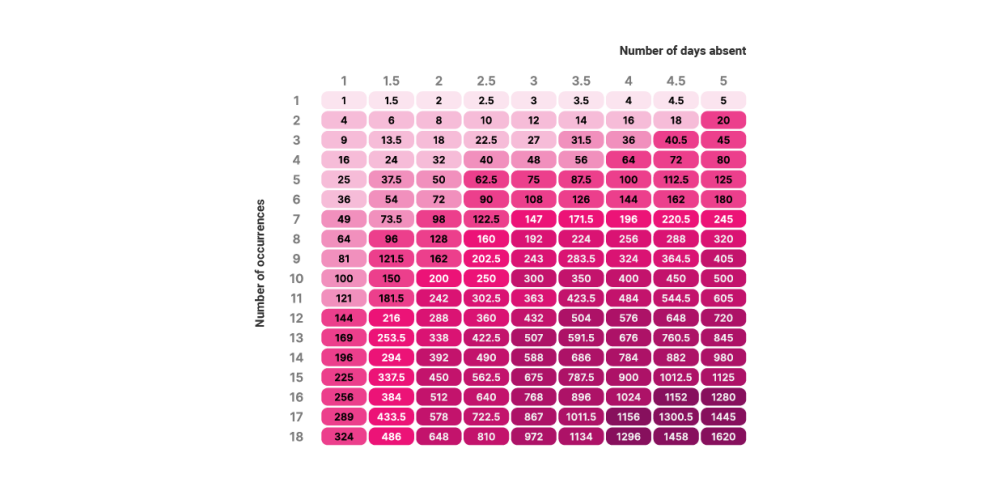
How Does the Bradford Factor Affect Businesses?
The Bradford Factor helps businesses identify patterns in employee absenteeism that could indicate potential issues. Focusing on frequent short-term absences allows managers to spot employees who might be taking advantage of the system or who may need support due to underlying health issues. This proactive approach enables businesses to address absenteeism issues before they escalate, potentially reducing costs associated with temporary replacements and loss of productivity.
Moreover, it offers a data-driven approach to absence management, which can be particularly useful in large organisations. With clear metrics, HR departments can allocate resources more effectively and develop targeted interventions for employees who frequently take short-term leave. This not only aids in managing current absences but also helps in forecasting future trends and preparing accordingly.
Boosting Productivity
Managing absenteeism effectively can significantly boost overall productivity. Frequent absences can disrupt team dynamics and delay project timelines. By monitoring Bradford Factor scores, businesses can take proactive steps to address these issues and maintain a smooth workflow. Employees who are frequently absent can inadvertently cause bottlenecks, making it difficult for teams to meet deadlines and achieve targets.
In addition, by addressing frequent absenteeism, businesses can improve team morale. When team members are consistently present, it fosters a sense of reliability and cohesion, enabling teams to function more effectively. This, in turn, can enhance the overall work environment, leading to higher employee satisfaction and retention rates.
Enhancing Employee Engagement
Employees who understand how absenteeism affects their work environment are more likely to be engaged and committed. Transparency about how the Bradford Factor is used can encourage employees to communicate more openly about their absences and any challenges they may be facing. When employees feel that their concerns are heard and addressed, it builds trust and reinforces their commitment to the organisation.
By involving employees in the discussion about attendance and its impact, businesses can cultivate a culture of accountability and responsibility. Employees who are aware of the consequences of frequent absences are more likely to take steps to improve their attendance, thereby contributing to a more positive work culture.
How Can Businesses Manage the Bradford Factor?
Establishing clear absence policies is crucial. Employees should understand how absences are recorded and how they impact their Bradford Factor score. This clarity can help prevent misunderstandings and foster a culture of responsibility. By clearly communicating policies, businesses can set expectations for attendance and ensure that all employees are on the same page.
This consistency is key to maintaining employee trust and ensuring that the Bradford Factor is used as a tool for improvement rather than as a punitive measure.
Offering Support Systems
Sometimes, frequent absences are a sign that an employee is struggling. Whether it's due to health issues, personal problems, or work-related stress, offering support can make a big difference. Consider providing access to mental health resources, flexible work arrangements, or wellness programs. By supporting employees in this way, businesses can help reduce absenteeism and improve overall employee well-being. When employees feel that their employer genuinely cares about their well-being, they are more likely to stay with the company long-term, reducing turnover costs and maintaining continuity within teams.
Regularly Reviewing Scores
Managers should regularly review Bradford Factor scores to identify any concerning patterns. However, it's essential to approach these reviews with empathy and understanding. A high score should be a starting point for a conversation, not an automatic penalty. Regular reviews also provide an opportunity to celebrate improvements. When employees work to improve their attendance, acknowledging their efforts can boost morale and reinforce positive behaviour.
What Does the Bradford Factor Mean for Employees?
As an employee, knowing your Bradford Factor score can help you understand how your absences might be perceived by your employer. A high score might suggest that your absences are having a significant impact on your team, while a lower score indicates less disruption. If you notice your score rising, it might be time to reflect on the reasons behind your absences and consider discussing any challenges with your manager.
Understanding your score can also empower you to take proactive steps to improve your attendance. By identifying patterns in your absences, you can work to address the underlying causes and reduce your overall score. This proactive approach can enhance your reputation within the company and demonstrate your commitment to your role.
Open communication is key. If you're facing issues that are affecting your attendance, talking to your employer can help. They might be able to offer support or adjustments that make managing your work-life balance easier. Being transparent about your situation can foster understanding and cooperation, leading to mutually beneficial solutions.
Taking Responsibility
Understanding the impact of your absences can encourage you to take responsibility for your attendance. Of course, everyone gets sick now and again and may need time off. But taking responsibility for your attendance shows your employer that you are committed to your role and aware of your impact on the team.
Balancing the Bradford Factor
While the Bradford Factor is a useful tool, it shouldn't be the sole method for managing absences. It's crucial to consider the context behind the numbers. For instance, an employee dealing with a chronic illness shouldn't be unfairly penalised for absences beyond their control. Understanding the individual circumstances of employees ensures that absence management is fair and compassionate.
Businesses should strive to balance quantitative data with qualitative insights. By considering the broader context of an employee's situation, managers can make informed decisions that support both the individual and the organisation. This balanced approach helps prevent the misuse of the Bradford Factor as a purely disciplinary tool.
Fostering a Positive Work Environment
Ultimately, the goal of using the Bradford Factor is to create a more positive and productive work environment. By combining this tool with supportive policies and open communication, businesses can ensure that they're not only managing absences but also promoting employee well-being. Let's face it, a positive work environment leads to higher levels of employee engagement, productivity, and retention.
Conclusion
The Bradford Factor is more than just a mathematical formula; it's a way for businesses to understand and manage employee absences effectively. For employees, it's a reminder of how attendance can impact their work environment and relationships. By using the Bradford Factor thoughtfully and with compassion, businesses can foster a workplace where both productivity and employee well-being thrive. Remember, it's all about balance and understanding. Here's to healthier workplaces and happier teams!